Hydrogen embrittlement resistant new steel links solutions for off-shore wind turbines.
To increase the use of electricity produced from renewables the full potential of Europe’s offshore wind energy has to be developed. To unlock Europe’s offshore potential, the number of installed offshore wind turbines is expected to rise in the coming years.
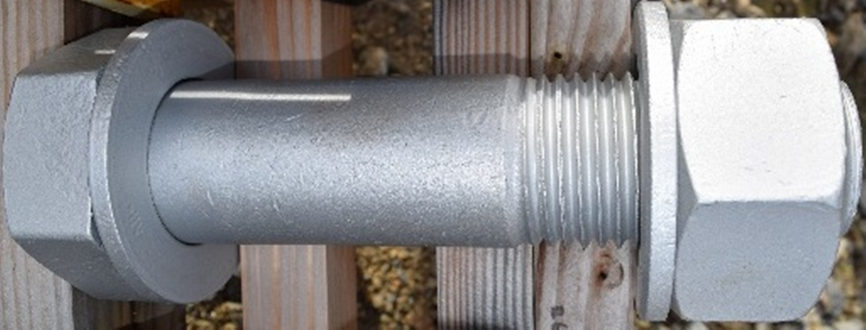
Cost reduction and efficiency are still imperative in this technology and the industry is thus designing larger power generators, up to 10 MW. This trend will lead to larger foundations due to higher mechanical demands. Flanged connections are still an integral part of any offshore developments with fasteners being the primary means for assembly. Fasteners with diameters over M48 are becoming common and bolts already used can be as high as M72. Therefore, a technical and research effort is needed in the fasteners field to support the ever-increasing size of offshore wind turbines. On one hand, HELIX will develop, test and provide fasteners able to withstand high applied stresses under harsh environmental conditions typical of large offshore wind turbines. This will be achieved by developing and optimizing a novel high strength steel grade in qualities 10.9 and 12.9 and new protecting zinc-flake based coatings. On the other hand, HELIX will contribute to unravel how atmospheric and immersed conditions, material composition and microstructure, surface treatment and previous corrosion affect hydrogen embrittlement of high strength steels. HELIX will use advanced characterization techniques as well as traditional techniques under both atmospheric and immersion conditions, to advance in the knowledge of hydrogen absorption in high strength steels under cathodic protection and in atmospheric conditions. This knowledge will not only allow tailoring the steel and coating microstructure to achieve both excellent corrosion protection ability and low risk of hydrogen embrittlement but also influence policy and practice in the offshore wind sector.
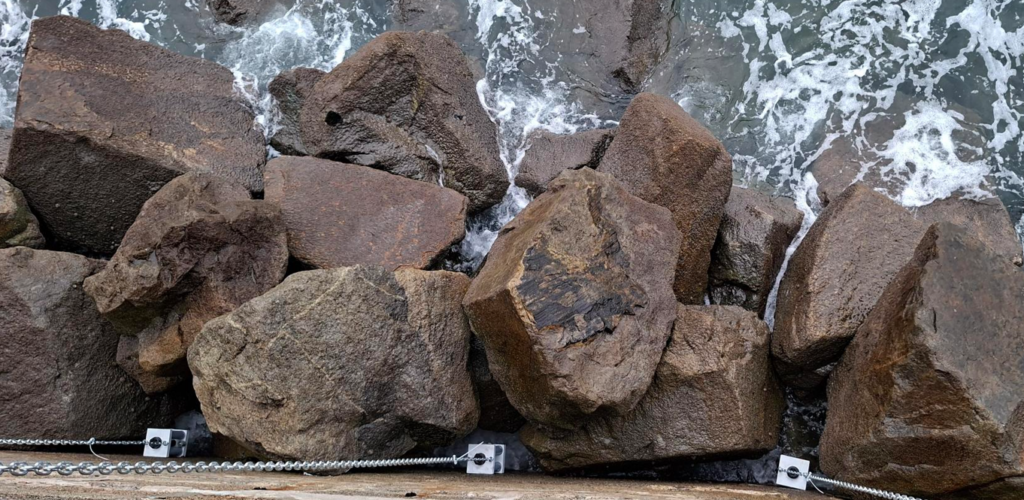
In HELIX project, the French Corrosion Institute investigates the hydrogen embrittlement resistance of the steels developed for the project, as well as the durability of zinc flake coatings, in particular PFAS-free solutions. The French Corrosion Institute also carries out exposures under real conditions, including full seawater immersion and exposure at an atmospheric marine test site.
Participants of the HELIX project
| FUNDACIO EURECAT (Spain) is the main technological center in Catalonia, providing the industrial and business sector with differential technologies and advanced expertise. | Sidenor (Spain) is a European market leader in the long steel products industry for special steels, as well as a major supplier of cold-drawn products on the European market. |
| Institut de la Corrosion (France) is one of the largest laboratories in the field of corrosion and corrosion protection of materials and structures. | Peiner UMFORMTECHNIK (Germany) was a German company specialized in bolt manufacturing. |
| Dörken Coatings (Germany) is a German company specialized in corrosion protection coatings. Dörken develops and manufactures technical paints and protective systems, particularly zinc flake technology, designed to protect metal parts used in various industries (automotive, construction, mechanical engineering, etc.). | VYSOKA SKOLA CHEMICKO-TECHNOLOGICKA V PRAZE (Czech Republic) is a leading study and research center in the field of chemistry in the Czech Republic. It is among the largest institutions in Central Europe dedicated to technical chemistry, chemical and biochemical technologies, materials engineering and chemical engineering, food chemistry, and environmental studies. |
Results and papers
To come
Learn more
Project website: https://helix-project.eu/
EURECAT: https://eurecat.org/en/portfolio-items/helix/
This project is co-funded by the European Union in the frame of the RFCS (Research Fund for Coal and Steel) program
_____________________________________
The views and opinions expressed are those of the author(s) only and do not necessarily reflect those of the European Union or the RFCS. Neither the European Union nor the granting authority can be held responsible for them.