Medical implant corrosion in healthcare: biodegradable and permanent implants
Medical implant corrosion is a critical challenge for manufacturers of implantable devices. The French Corrosion Institute studies the mechanisms and kinetics of degradation under ex situ simulated physiological conditions. Our testing covers general and localized corrosion, stress corrosion cracking, and corrosion fatigue – conducted in accordance with ASTM F2129 and ISO 10993-15, as part of European research projects. Permanent alloys (TA6V titanium, 316L stainless steel, CoCrMo) and biodegradable implants (magnesium, zinc, iron, and polymers) are all covered.
Study of material degradation/resistance for implants
The French Corrosion Institute characterizes these mechanisms through electrochemical measurements and immersion tests in ex situ simulated physiological environments : PBS, Hank’s solution, and artificial serum. Our analyses identify the corrosion products formed and quantify dissolution rates. These data are essential for the regulatory qualification of biodegradable implants.
Biodegradable implants: characterization of degradation kinetics
Biodegradable implants based on magnesium, zinc, iron, and their alloys, with or without polymeric or composite coatings, gradually resorb in the body. Controlling their corrosion kinetics is critical: overly rapid degradation compromises the mechanical integrity of the implant, while overly slow degradation may delay tissue regeneration.
The French Corrosion Institute characterizes the degradation mechanisms and kinetics of these materials through electrochemical measurements and immersion tests in ex situ simulated physiological environments (PBS, Hank’s solution, artificial serum). Our analyses make it possible to identify the corrosion products formed and quantify dissolution rates—essential data for the regulatory qualification of biodegradable implants.
Stress corrosion cracking and corrosion fatigue of implants
Orthopedic, cardiovascular, and dental implants are subjected to repeated mechanical loading in a physiological environment. Combined with a corrosive environment, these mechanical stresses can lead to two types of premature failure: stress corrosion cracking (SCC) and corrosion fatigue. Both phenomena are distinct from static corrosion.
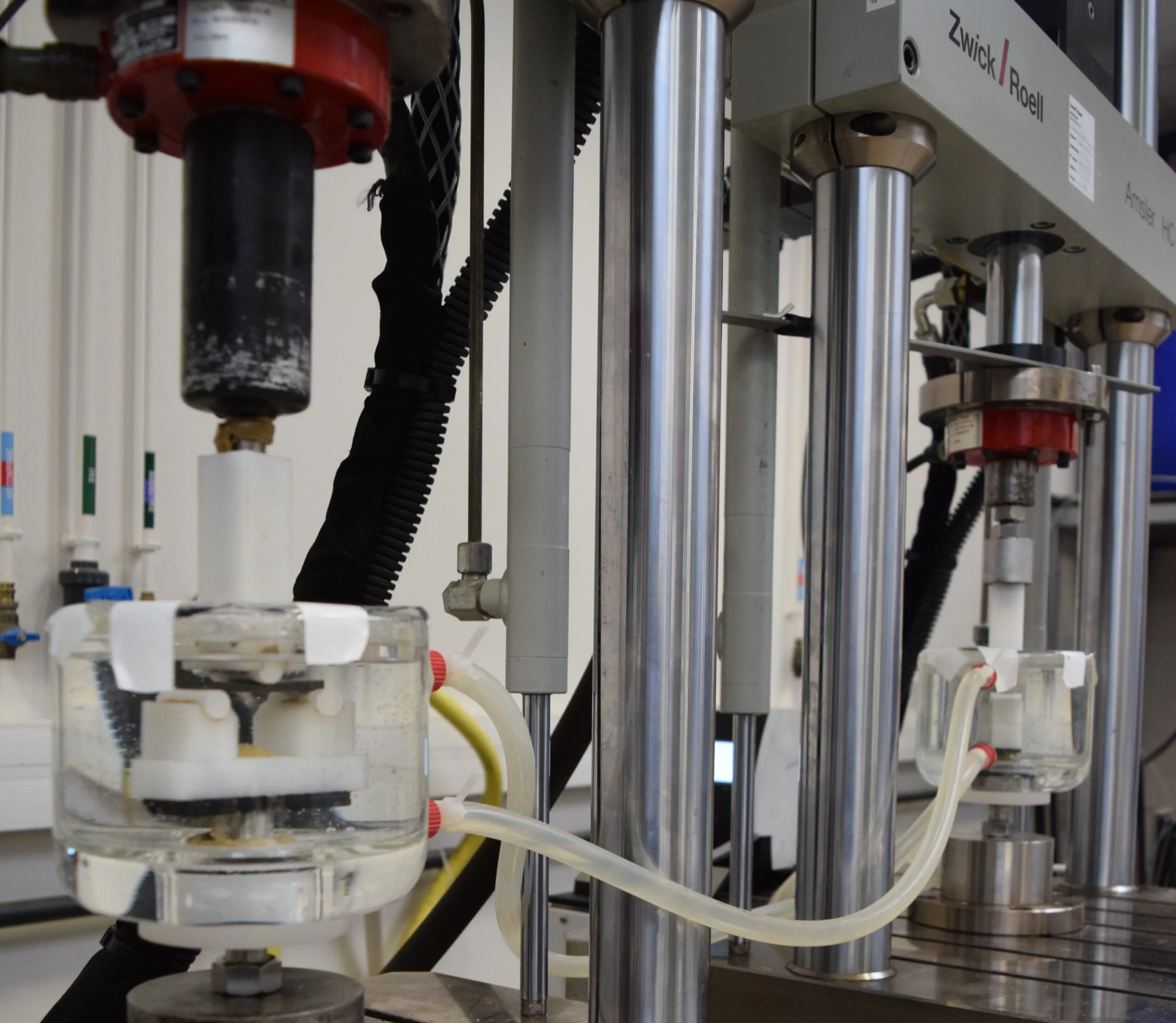
The French Corrosion Institute is equipped with dedicated facilities for these tests under ex situ simulated physiological conditions. Materials tested include TA6V titanium, 316L stainless steel, CoCrMo, and biodegradable alloys.
Our missions
- Characterize mechanisms of general, localized (pitting, crevice), and galvanic corrosion of implantable materials in ex situ simulated physiological environments.
- Measure degradation kinetics of biodegradable implants (Mg, Zn, Fe, polymers) and identify the corrosion products formed.
- Develop coatings to control the corrosion kinetics of biodegradable implants and improve the resistance of permanent implants.
- Assess resistance to stress corrosion cracking (SCC) and corrosion fatigue of implantable metallic alloys.
- Provide mechanistic and kinetic data to support the regulatory approval of medical devices (MDR 2017/745).
Our services
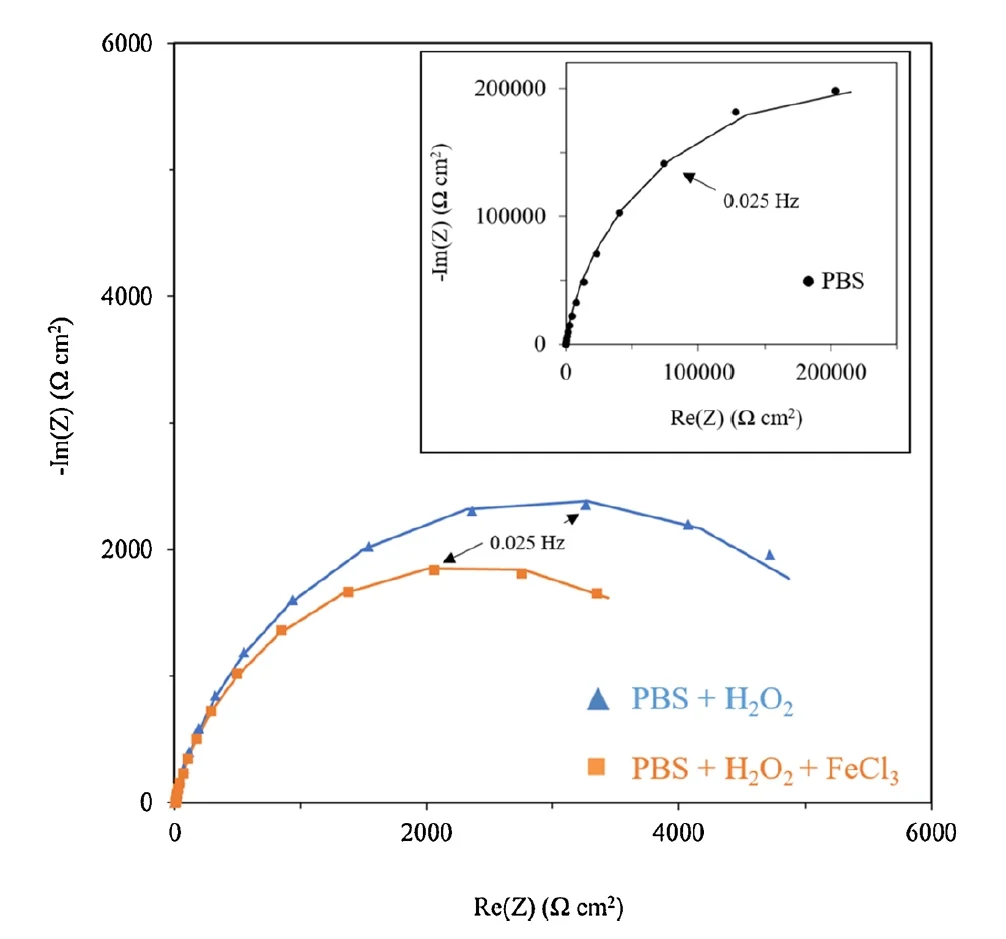
- Electrochemical testing in simulated physiological environments: polarization curves, electrochemical impedance spectroscopy (EIS) (ASTM F2129, ISO 10993-15).
- Immersion testing and corrosion rate measurements on biodegradable implants (Mg, Zn, Fe, etc.).
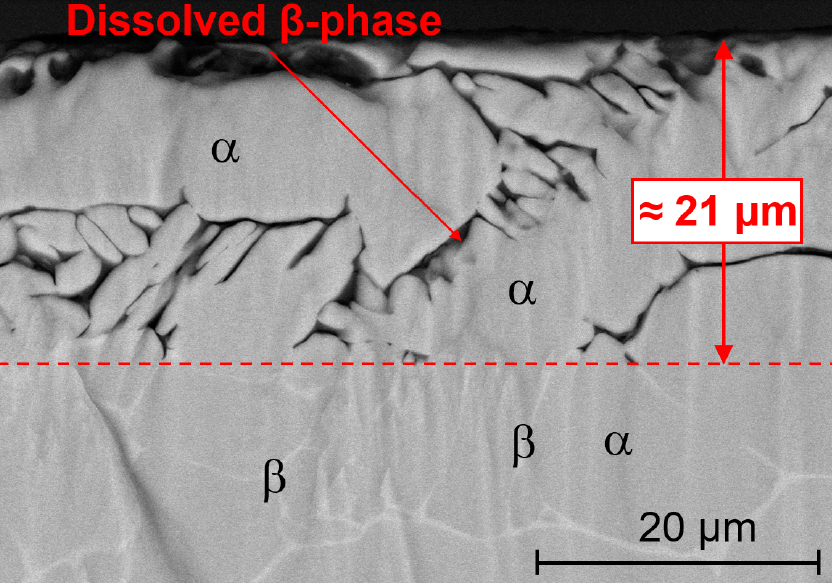
- Identification and characterization of corrosion products: SEM, EDS, profilometry.
- Stress corrosion cracking (SCC) testing in ex situ physiological environments.
- Corrosion fatigue testing on metallic implants under simulated physiological conditions.
- Consulting on material selection and surface treatments for medical applications.
To learn more about our services – Contact us : brest@institut-corrosion.fr
European projects and collaborative R&D
The French Corrosion Institute takes part in European research projects focused on corrosion and degradation of implantable materials. These collaborations enable the development of advanced testing methodologies and contribute to improving the understanding of degradation mechanisms and kinetics of implants.
F.A.Q – Medical implant corrosion
1. Which implant materials do you test ?
We test permanent alloys (TA6V titanium, 316L stainless steel, CoCrMo) and biodegradable implants based on magnesium, zinc, and iron. → Contact us
2. Do you perform testing in accordance with medical standards ?
Yes. Our medical implant corrosion tests are conducted according to ASTM F2129 and ISO 10993-15, in ex situ simulated physiological media. → Our services
3. Can you characterize the degradation kinetics of biodegradable implants ?
Yes. We measure dissolution rates and identify corrosion products formed during immersion in PBS, Hank’s solution, and artificial serum. → Contact us
4. Are corrosion fatigue tests available for metallic implants ?
Yes. We have dedicated equipment for stress corrosion cracking (SCC) and corrosion fatigue testing on metallic implants under simulated physiological conditions. → Contact us