Oil & Gas corrosion : testing, expertise and material qualification
The French Corrosion Institute provides specialized corrosion testing and material qualification services for the oil and gas industry. Our laboratories conduct testing in H₂S and CO₂ environments (sour service, sweet service), HIC, SSC, and SOHIC testing in accordance with NACE/ISO standards, as well as evaluations of resistance to hydrogen embrittlement for carbon steels, stainless steels, and alloys. We operate across the entire value chain – exploration, production, pipeline transport, and refining – to ensure the integrity of equipment under high-pressure and high-temperature conditions.
Corrosion in the oil and gas sector: among the most aggressive environments
Exploration, production, transport, and refining activities expose equipment to some of the most aggressive environments in industry: acidic media containing H₂S and CO₂, high pressures and temperatures, and condensates rich in chlorides and toxic gases. Controlling corrosion in this sector is a sine qua non condition for ensuring personnel safety, maintaining the integrity of installations, and complying with regulatory requirements. For several decades, the French Corrosion Institute has been supporting stakeholders in the oil and gas industry with advanced technical expertise and dedicated testing facilities.
Our missions for the Oil & Gas sector
- Qualify materials and equipment under service-representative conditions (HP/HT, sour service, acid gases).
- Identify and understand corrosion mechanisms specific to oil and gas environments.
- Contribute to optimizing protection solutions and material selection.
- Coordinate collaborative industrial projects (JIPs) with major stakeholders in the sector.
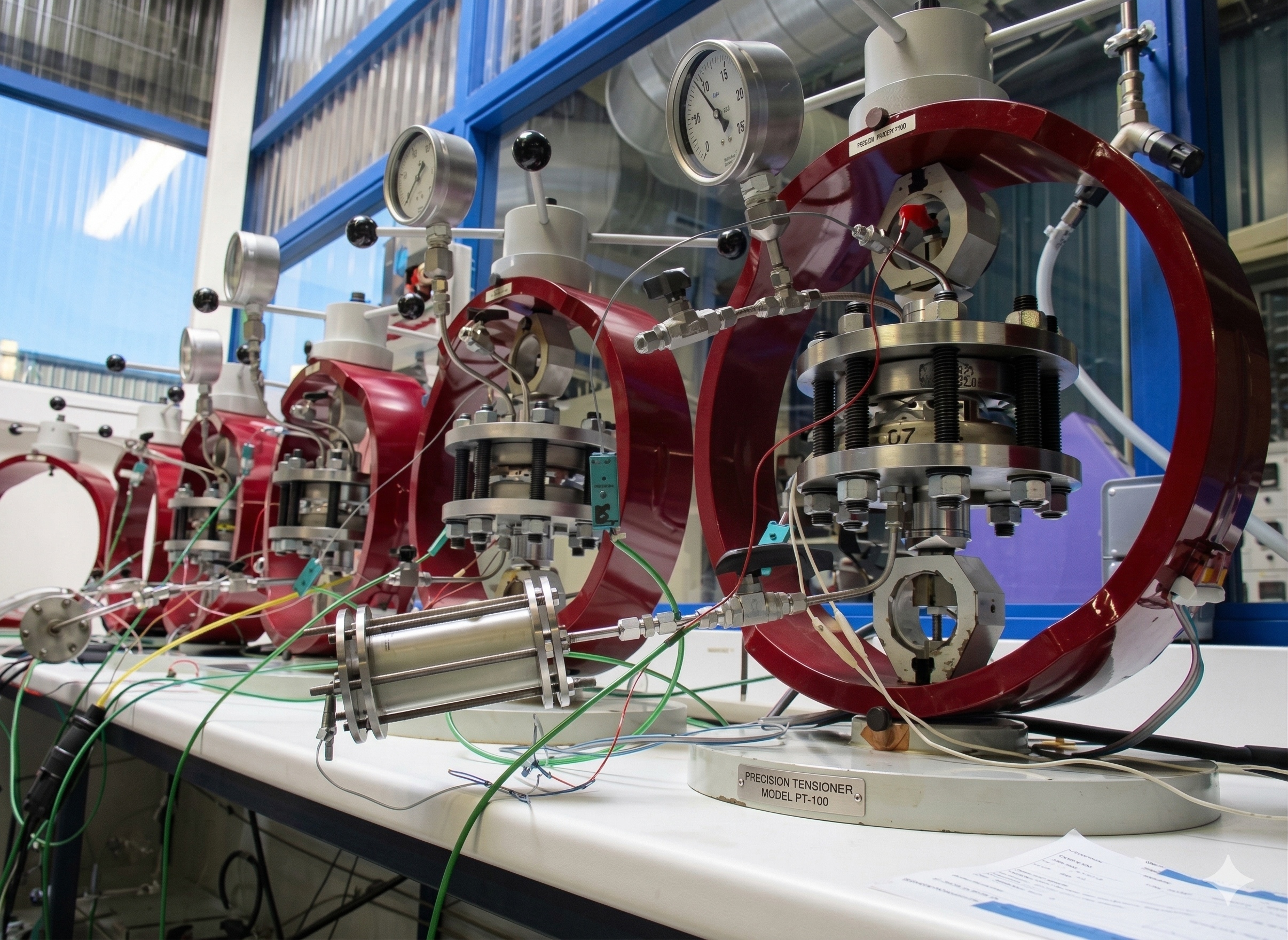
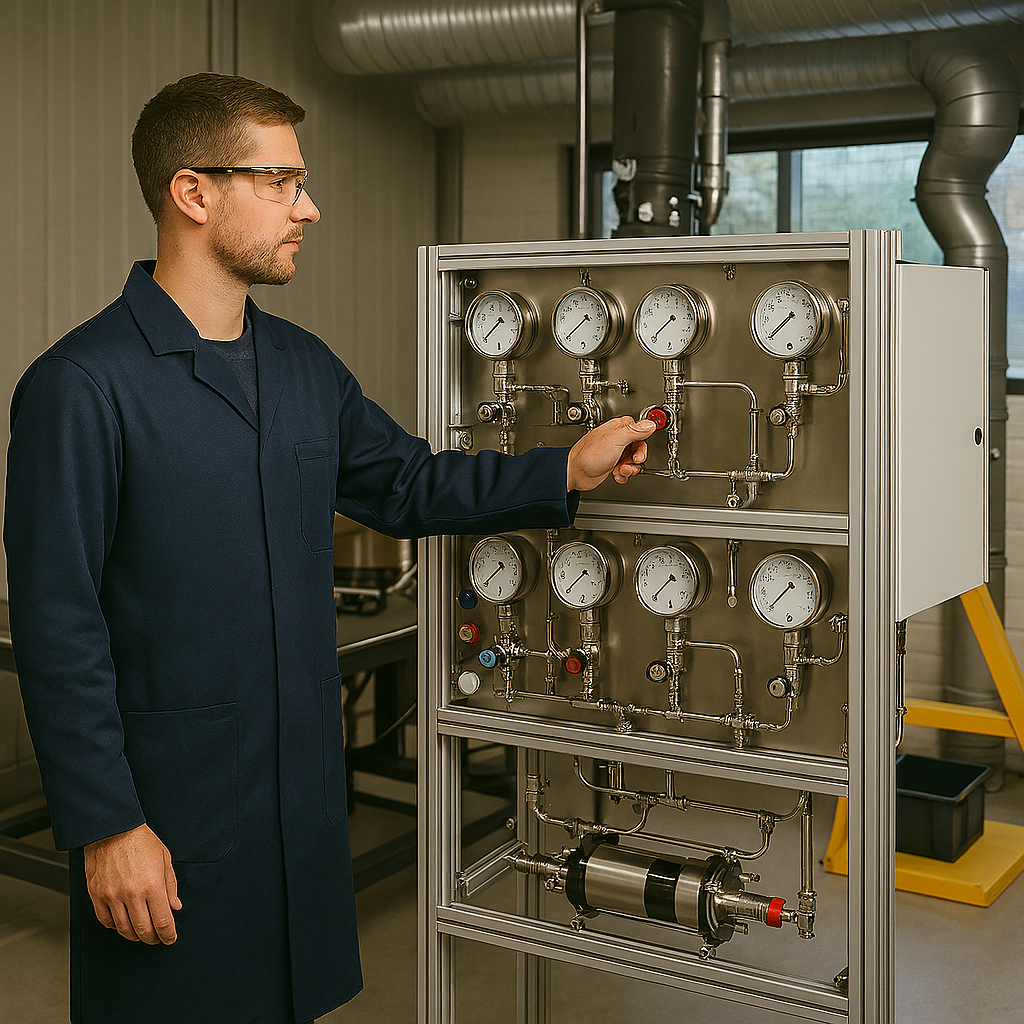
Oil & Gas corrosion testing: NACE standards, HIC, SSC, hydrogen embrittlement, and tailored solutions
- Participation in JIPs (Joint Industrial Projects) and R&D programs
- Standardized testing : NACE TM0177, TM0284, TM0316, TM0198, MR0175
- Testing in H₂S environments: HIC, SCC, slow strain rate, constant load
- High-pressure/high-temperature testing (up to 700 bar / 350 °C)
- Hydrogen permeation testing (atmospheric pressure and under pressure)
- High-pressure electrochemical testing
- Corrosion fatigue testing under pressure
- Development of custom test rigs for real components
- Consulting, material selection, and failure analysis
For a detailed overview of our protocols and equipment for testing under toxic and/or explosive gases, please visit our Testing Facilities for Toxic Gases page.
Activities of the MRC “CCUS and H2S”
Within the ARCOR association, the French Corrosion Institute conducts collaborative projects with major oil and gas industry stakeholders : Alleima, Saipem, Aperam, Subsea7, ArcelorMittal / OCAS, Technip Energies, TechnipFMC – FlexiFrance, TotalEnergies One Tech, National Oilwell Varco, Vallourec, Outokumpu Stainless AB, voestalpine Böhler Edelstahl, and Shell.
Four main research areas structure the MRC work. Material selection and qualification comes first – covering carbon steels, stainless steels, and special alloys under service-representative conditions.
A second area addresses degradation mechanisms, with a focus on Stress Corrosion Cracking (SCC) and Hydrogen Induced Cracking (HIC), to anticipate risks and improve equipment durability.
Developing representative testing methods is a third priority : reproducing real service conditions as closely as possible to validate material performance.
Finally, this work is strongly application-driven. It provides technical support to the Oil & Gas industry, CO₂ transport, and offshore activities.
Want more information?
Explore our flagship studies in the Oil & Gas / H₂S domain and contact our experts.
F.A.Q
1. What corrosion tests do you carry out for the Oil & Gas sector ?
We carry out standardised and bespoke corrosion tests for the oil and gas industry. Our services include HIC, SSC and SOHIC testing per NACE TM0284 and TM0177, slow strain rate and constant load testing in H₂S environments, and high-pressure / high-temperature testing (up to 700 bar / 350°C). We also develop custom test rigs for real components. → Contact us
2. What materials do you qualify for sour service environments ?
We qualify carbon steels, stainless steels, nickel-based alloys and titanium alloys under service-representative conditions (sour service, sweet service, CO₂, H₂S). Our tests follow NACE MR0175, TM0177, TM0284 and TM0316 standards. We also carry out hydrogen permeation testing at atmospheric pressure and under pressure. → Learn more about our H₂S laboratory
3. Do you offer high-pressure electrochemical testing for the oil and gas sector ?
Yes. Our laboratories are equipped for high-pressure electrochemical testing. We carry out corrosion potential measurements, polarisation curves and impedance testing in H₂S, CO₂ or mixed environments, using autoclaves pressurised up to 700 bar. These tests help understand corrosion mechanisms under conditions close to real service. → Contact us
4. Do you take part in collaborative projects with the Oil & Gas industry ?
Yes. Within the ARCOR association, we coordinate the MRC “CCUS and H₂S” with major industrial partners: TotalEnergies, Shell, Vallourec, Saipem, Technip Energies, ArcelorMittal and others. These Joint Industrial Projects (JIPs) aim to qualify materials, develop representative testing methods and produce actionable data for industry. → Learn more about ARCOR