Building industry corrosion: durability of pre-painted steels and construction materials
Building industry corrosion affects pre-painted steels, cladding, profiles, and fasteners throughout their service life. Marine, urban, industrial, and rural environments directly impact durability, energy performance, aesthetics, and maintenance costs. The French Corrosion Institute coordinates collaborative R&D projects with the construction industry to evaluate and develop innovative solutions for pre-painted products.
The French Corrosion Institute, a long-standing partner of the building industry
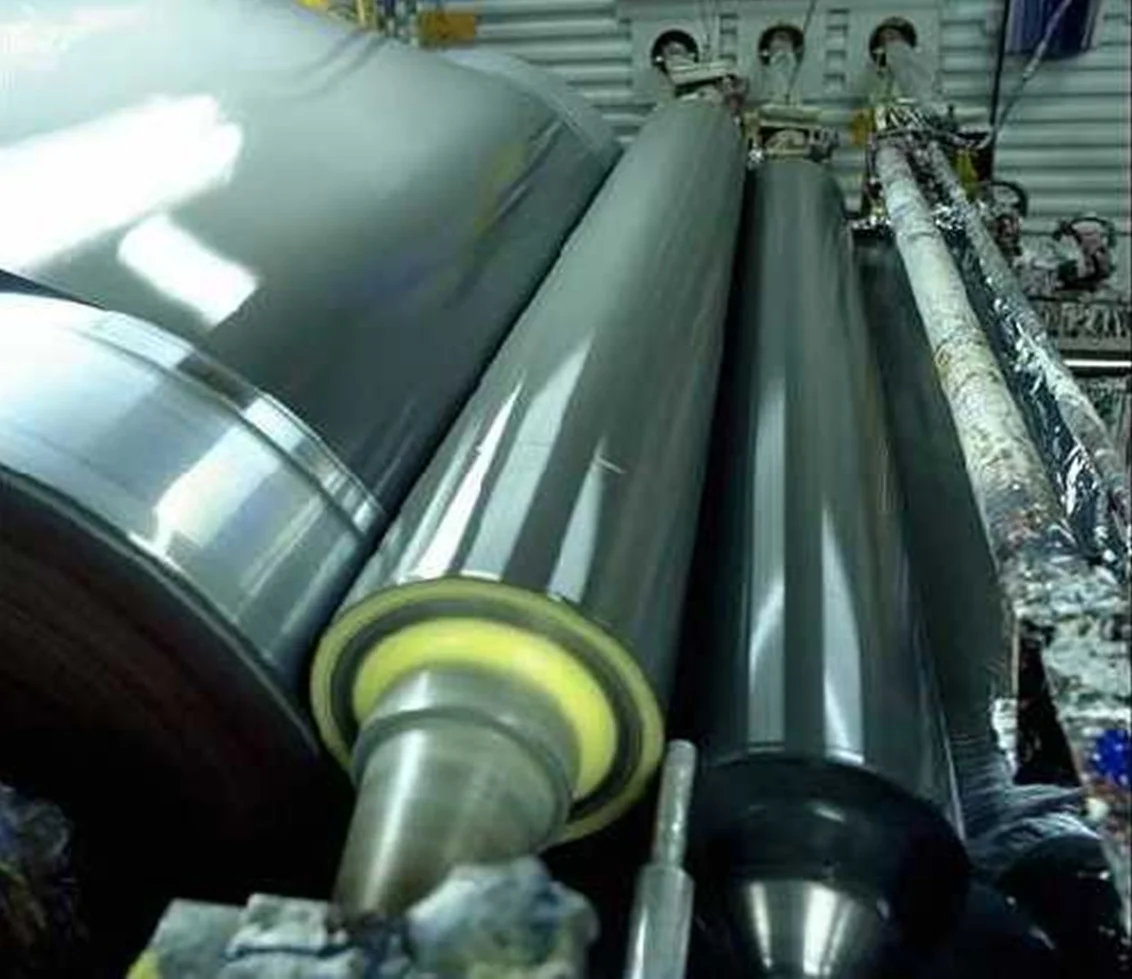
Building and construction industry is one of the founding domains of the French Corrosion Institute. From its earliest years, the Institute established itself as a leading player in France for assessing the durability of construction materials. Its expertise covers pre-painted steels (coil coating) used in building envelopes, cladding, and metal profiles.
This recognized expertise has led to a key strategic decision: the transfer to France of the MRC (Member Research Consortium) dedicated to the corrosion of pre-painted steels, previously hosted in Sweden. This relocation reflects the trust placed by major industry stakeholders in the French Corrosion Institute. Steelmakers, paint formulators, and coating manufacturers rely on the Institute to lead large-scale international collaborative research programs.
Our missions for the building sector
- Assess the corrosion resistance of pre-painted products across different markets and environments.
- Study the application of new environmentally friendly products.
- Support the development of pre-painted products with enhanced long-term resistance.
- Evaluate the corrosion resistance of pre-painted materials with specific surface functionalities.
Our services to qualify coil coated materials
Technically, our expertise covers the entire evaluation cycle of pre-painted materials:
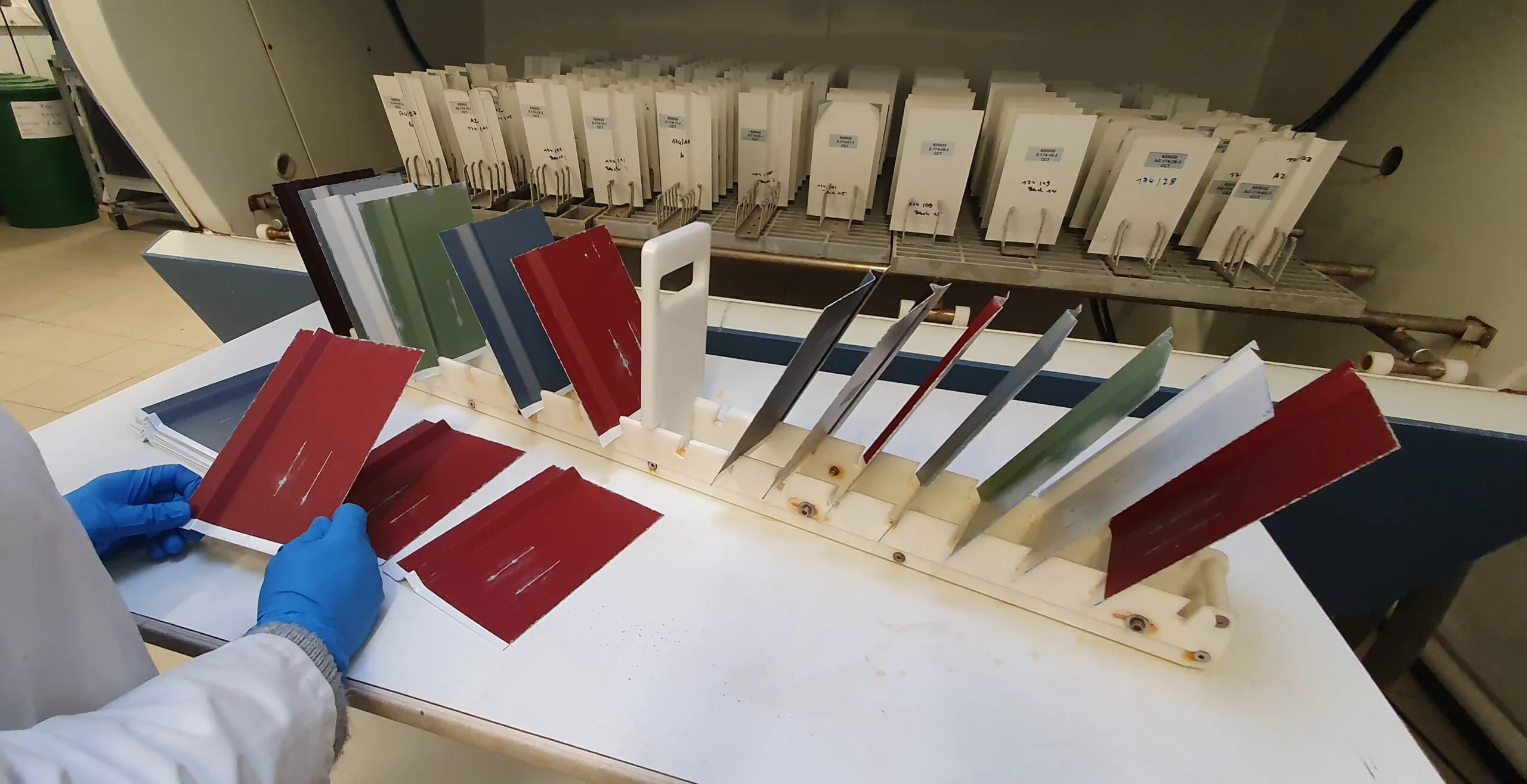
- Laboratory testing: neutral or acetic salt spray, cyclic corrosion, Bac-Ford test, continuous condensation (QCT), UV-condensation—to reproduce and accelerate real aging mechanisms.
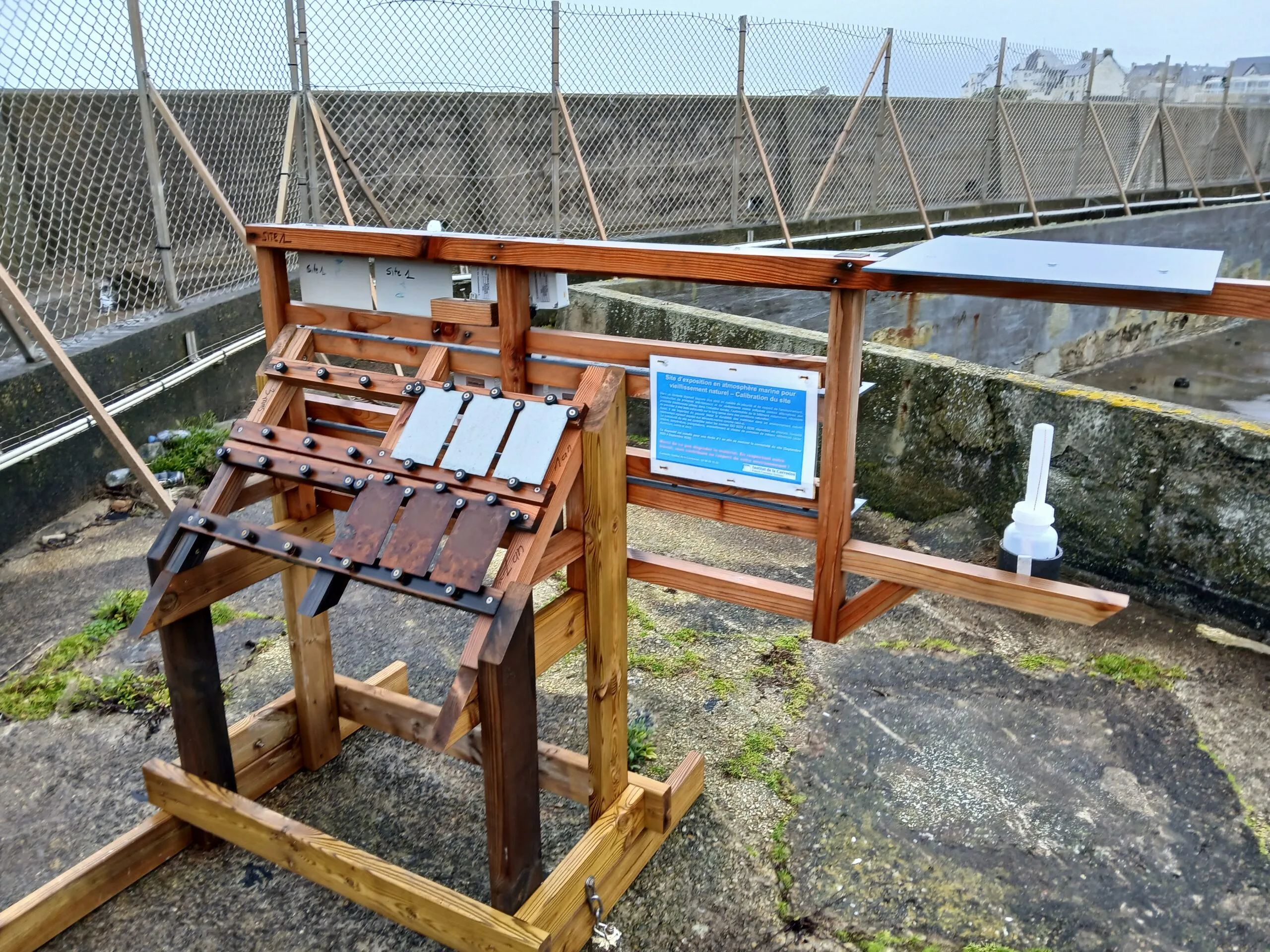
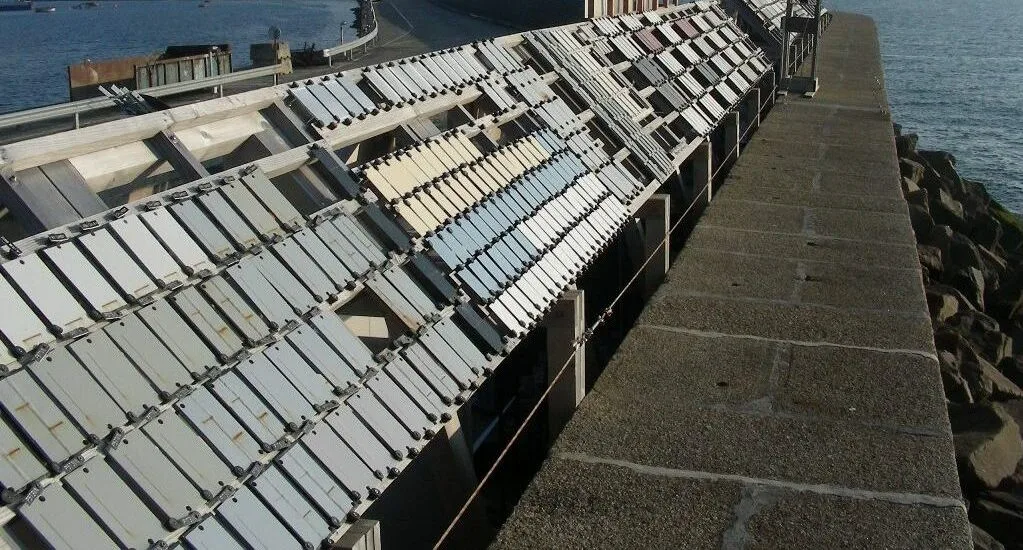
- Exposure under natural conditions on a global network of atmospheric sites, covering all corrosivity categories from C2 to CX (in accordance with EN 10169), from rural environments to the most aggressive marine zones.
- Characterization of indoor and outdoor atmospheres in accordance with ISO 9223, ISO 9225, and ISO 9226,. These measurements precisely qualify the exposure conditions experienced by materials.
- Analysis of corrosion mechanisms affecting zinc alloys and organic coatings, combined with the development of dedicated sensors for real-time monitoring of atmospheric phenomena.
- Consulting and material selection, failure analysis, and support for the development of new formulations, including low-energy polymerization technologies.
This integrated approach covers the full cycle, from fundamental research to real-world testing. Manufacturers are supported in bringing more durable and higher-performing pre-painted products to market. Current regulatory and environmental requirements are fully met.
R&D projects on pre-painted steels – MRC “Corrosion of coil coated steels” Committee
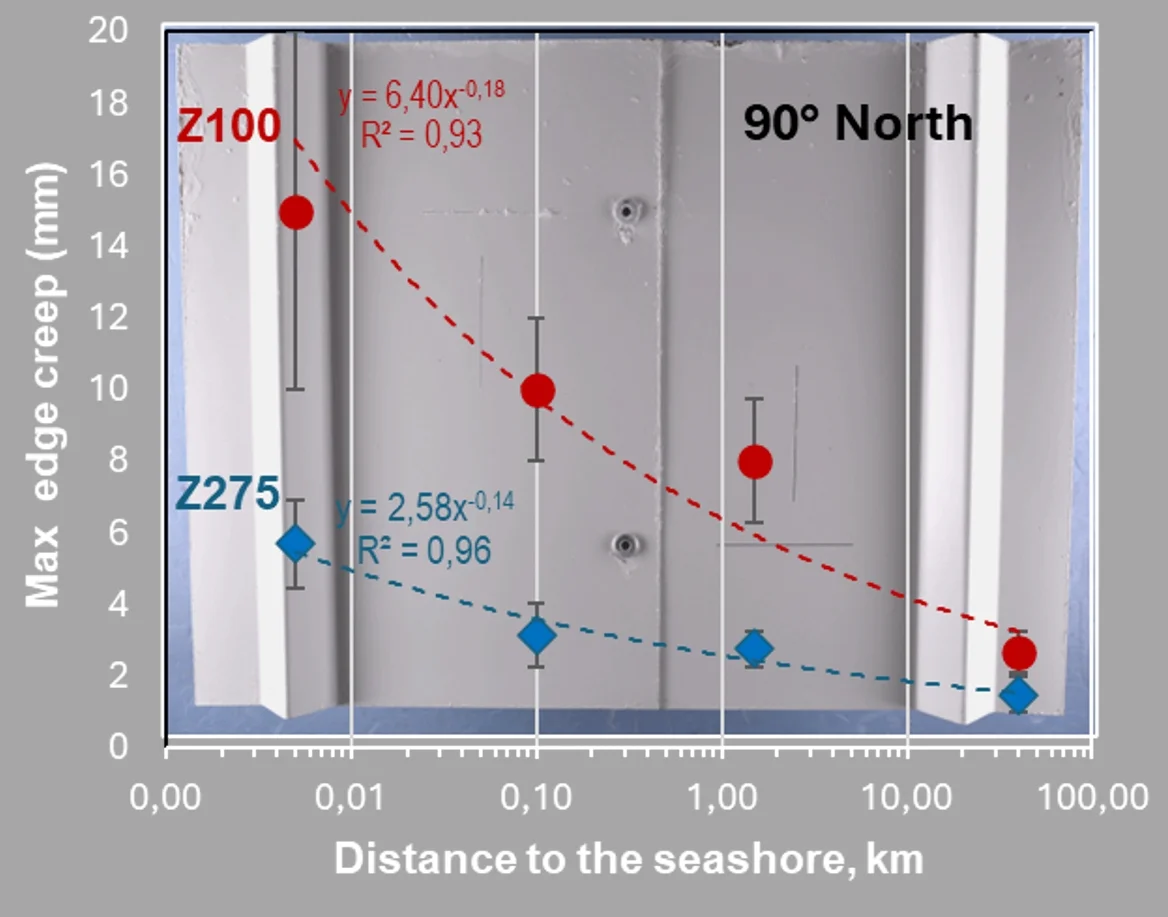
Today, the French Corrosion Institute coordinates, within the ARCOR association, cost-shared projects bringing together major players across the construction value chain: ArcelorMittal, BlueScope, Hyundai Steel, SSAB, Tata Steel, Ternium, VM Building Solutions, Voestalpine, AkzoNobel, Beckers, SNCZ, Henkel, BASF, PPG, and Sherwin-Williams. These collaborations enable the pooling of knowledge and accelerate the development of innovative solutions to meet growing challenges in durability and environmental compliance.
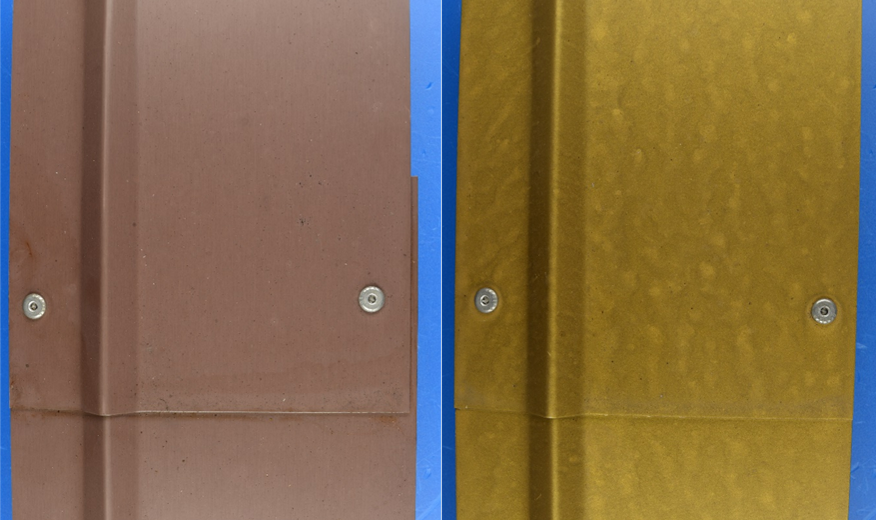
The MRC’s research activities focus on the corrosion properties of pre-painted steels, assessed under outdoor and laboratory conditions, as well as on the performance of zinc-alloy metallic coatings in aggressive environments. Fundamental corrosion mechanisms are also investigated to improve material durability and reliability. Dedicated atmospheric sensors are developed and deployed for real-time monitoring. Energy-efficient industrial processes are equally explored, contributing to more sustainable production.
Do you have a project in the building industry? Contact one of our experts
Contact us : brest@institut-corrosion.fr
More information
Our atmospheric exposure sites
Our capacities for accelerated corrosion testing
F.A.Q – Building industry corrosion
1. Which materials do you evaluate for the building industry ?
We primarily evaluate pre-painted steels (coil coating), zinc-alloy metallic coatings, metal cladding and profiles, as well as their fasteners. → Contact us
2. Are accelerated tests available for pre-painted products ?
Yes. We carry out neutral and acetic salt spray tests, cyclic corrosion, Bac-Ford test, UV-condensation and QCT in our climatic test chambers. → Our test chambers
3. What natural exposure sites are available for the building sector ?
Our global network of atmospheric exposure sites covers all corrosivity categories, from C2 to CX, in accordance with EN 10169. → Our exposure sites
4. Do you participate in collaborative R&D projects in the building industry ?
Within the ARCOR association, we coordinate the MRC “Corrosion of coil-coated steels” with the leading global players in the sector. → Learn more about ARCOR