Context
The aerospace industry has a critical need to develop reliable accelerated tests for aerospace aluminum alloys, driven by the introduction of new materials and regulatory and environmental constraints (REACH) limiting the use of chromates. Current standardized tests are recognized as being poorly representative of the real atmospheric conditions experienced by an aircraft or a helicopter.
Methods
The experimental approach is based on:
- Standardized conventional tests
- Cyclic tests developed through design of experiments (variation of key parameters)
- Long-term natural exposure in Brest
The tests are carried out on both painted and unpainted alloys, which exhibit different corrosion mechanisms and therefore require adapted characterization methods.
Results and conclusions
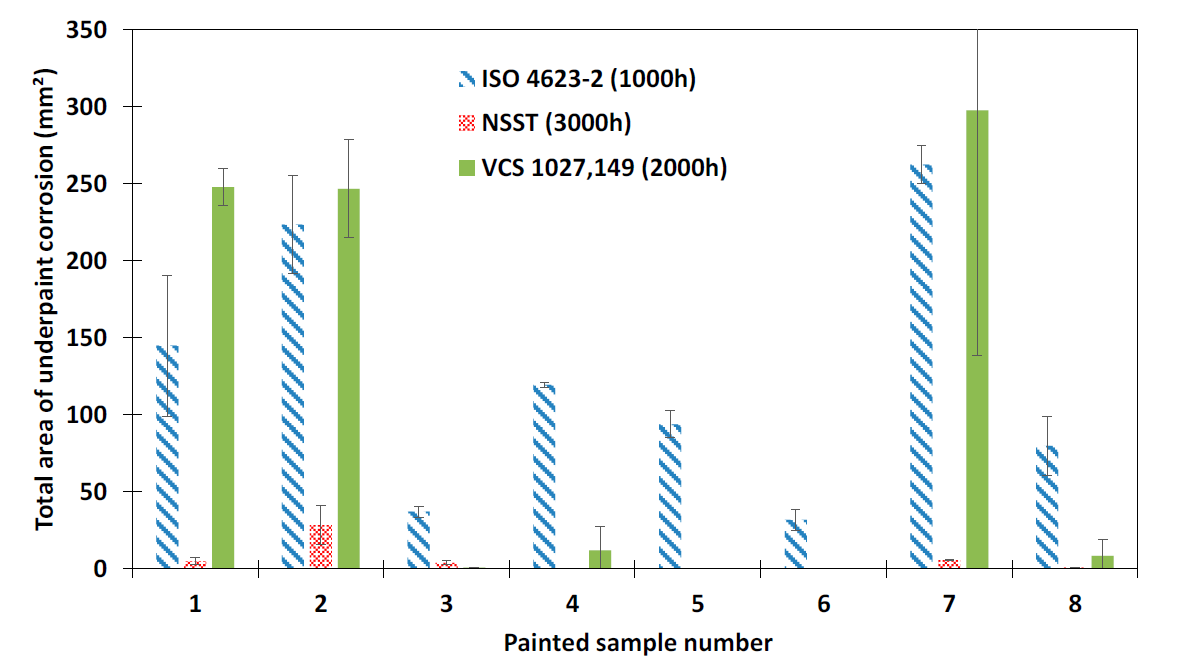
Traditional tests (particularly salt spray) do not allow accurate prediction of in-service behavior. Corrosion strongly depends on environmental parameters and the material. The developed cyclic tests show a much better correlation with real exposure, reproducing the observed mechanisms and trends. They appear to be the most suitable candidates for the qualification of aerospace materials.