Anti-corrosion coatings and paints : lasting protection for your structures
Anti-corrosion coatings and paints are one of the most widely used solutions for protecting metallic structures against chemical, marine, and atmospheric attack. The French Corrosion Institute supports industry in selecting, qualifying, and optimising their protection systems, in accordance with international standards (ISO 12944-6/9).
Anti-corrosion coatings and paints : protection mechanisms and industrial applications
Corrosion represents a considerable cost for global industry. It is a permanent challenge in the design of structures exposed to environmental attack. Among the available solutions, organic coatings stand out as one of the most widespread : they combine effectiveness with economic competitiveness.
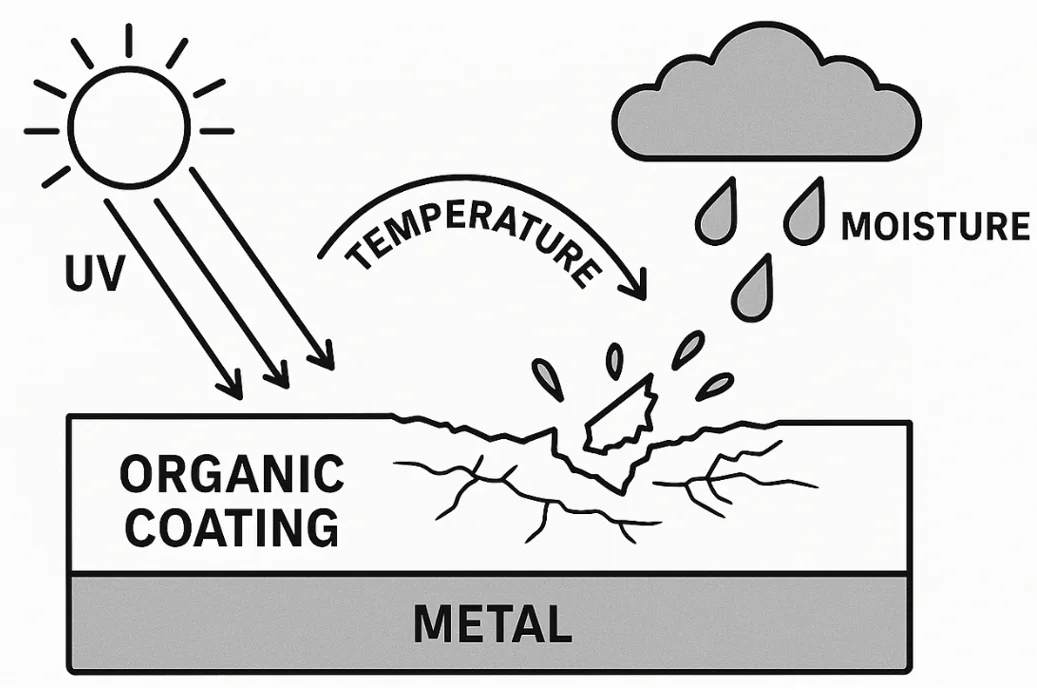
Their main advantage lies in their ability to form a physical barrier, limiting the diffusion of electrolyte and aggressive species that can trigger corrosion. Anti-corrosion coatings and paints are present across all sectors : heavy industry, aerospace, construction, offshore. Their technologies vary according to the application. Their role remains constant : to form a lasting barrier between the metal and its aggressive environment.
Types of anti-corrosion coatings
Several families of anti-corrosion coatings and paints exist, each suited to specific environments and constraints :
- Epoxy coatings are among the most widely used. Their excellent adhesion and strong chemical resistance make them well-suited to severe environments : immersion, chemical industry, offshore. They do, however, require a topcoat to resist UV degradation.
- Polyurethane coatings offer excellent resistance to weathering and UV radiation. They are the reference solution for externally exposed structures, particularly as a topcoat in a multi-layer system.
- Zinc-rich coatings provide cathodic protection by sacrificing themselves in place of the metal. Particularly effective on steel structures exposed to highly corrosive environments, they often form the first layer of a multi-layer system.
- Zinc flake coatings, long reserved for automotive fasteners, are now extending to larger components in other sectors. Their anticorrosion performance-to-coating-thickness ratio is particularly favourable.
Other solutions reinforce the physical barrier against moisture and chemical agents. This includes glass flake coatings and high-build systems, particularly used in petrochemical and marine sectors.
In most cases, optimum performance is achieved through multi-layer systems combining primer, intermediate coat, and topcoat. The choice of system depends on the corrosivity category per ISO 12944, the substrate type, and the expected service life. This selection requires a rigorous engineering approach to guarantee the durability and cost-effectiveness of the installation.
Expertise in coating evaluation and durability
Understanding the protection mechanisms offered by these coatings, and how they evolve over time, is inseparable from the study of corrosion itself. Our approach rests on three pillars : accelerated corrosion testing in the laboratory, exposure under real climatic conditions, and advanced characterisation analyses. The coating is at the heart of every study.
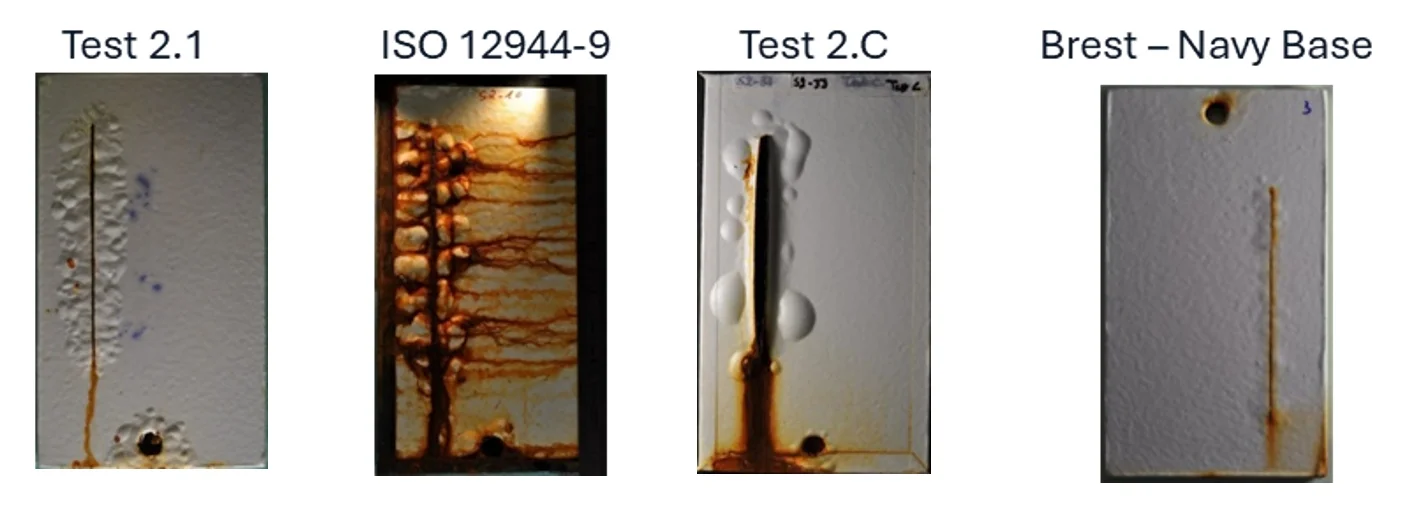
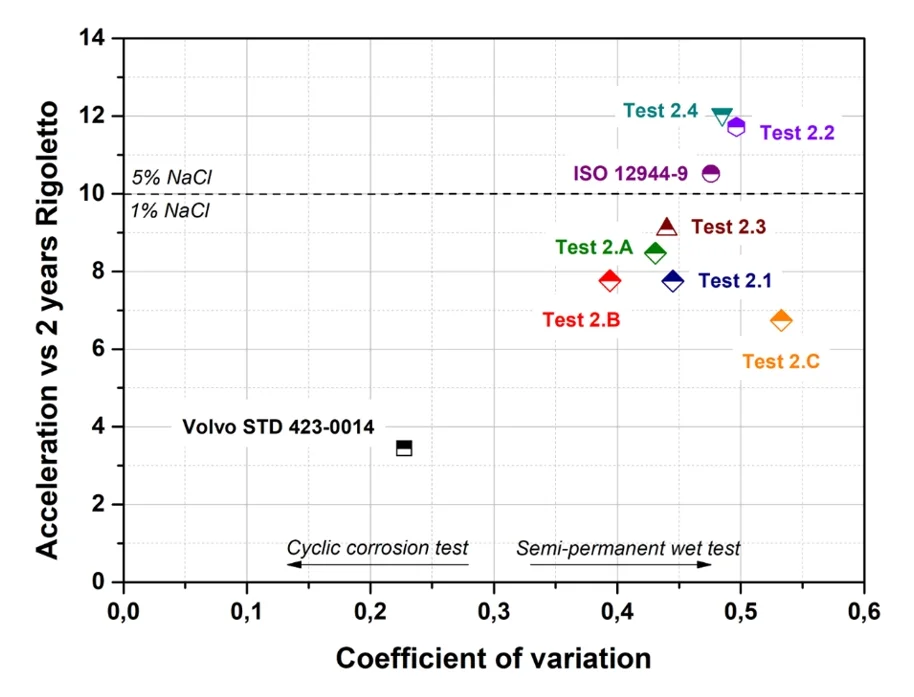
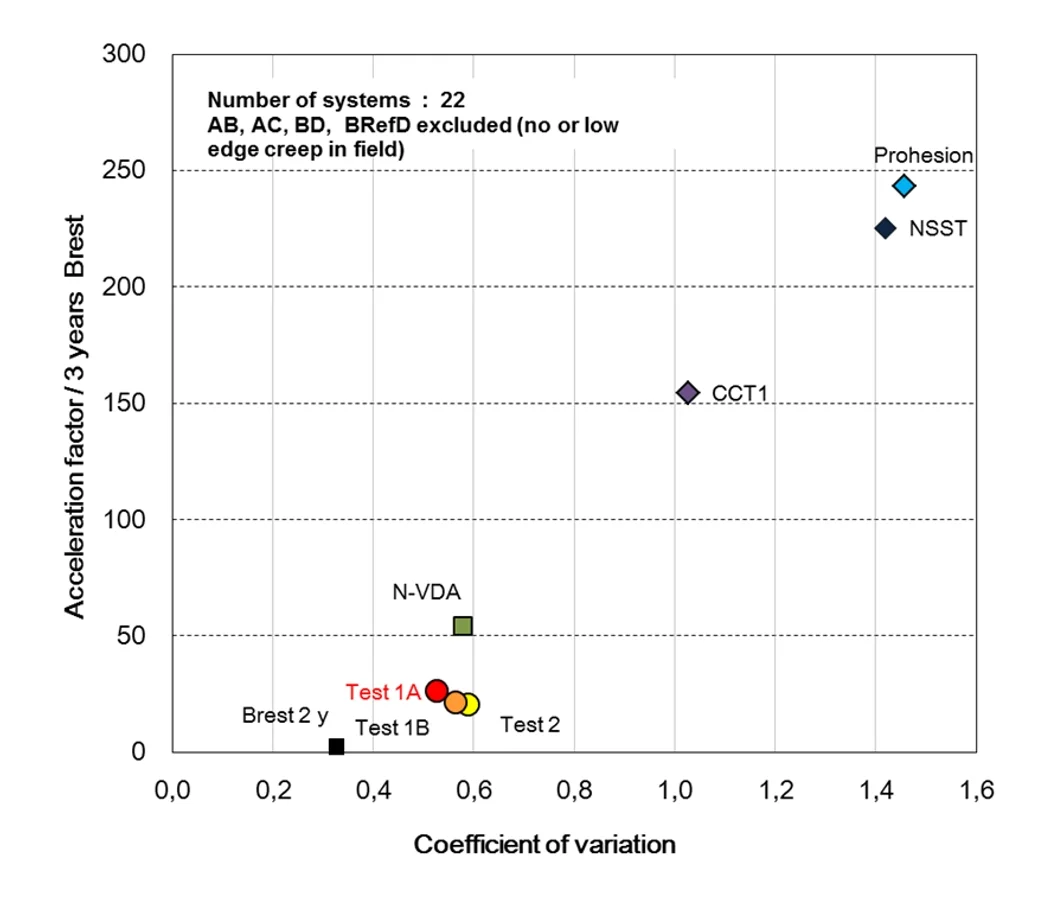
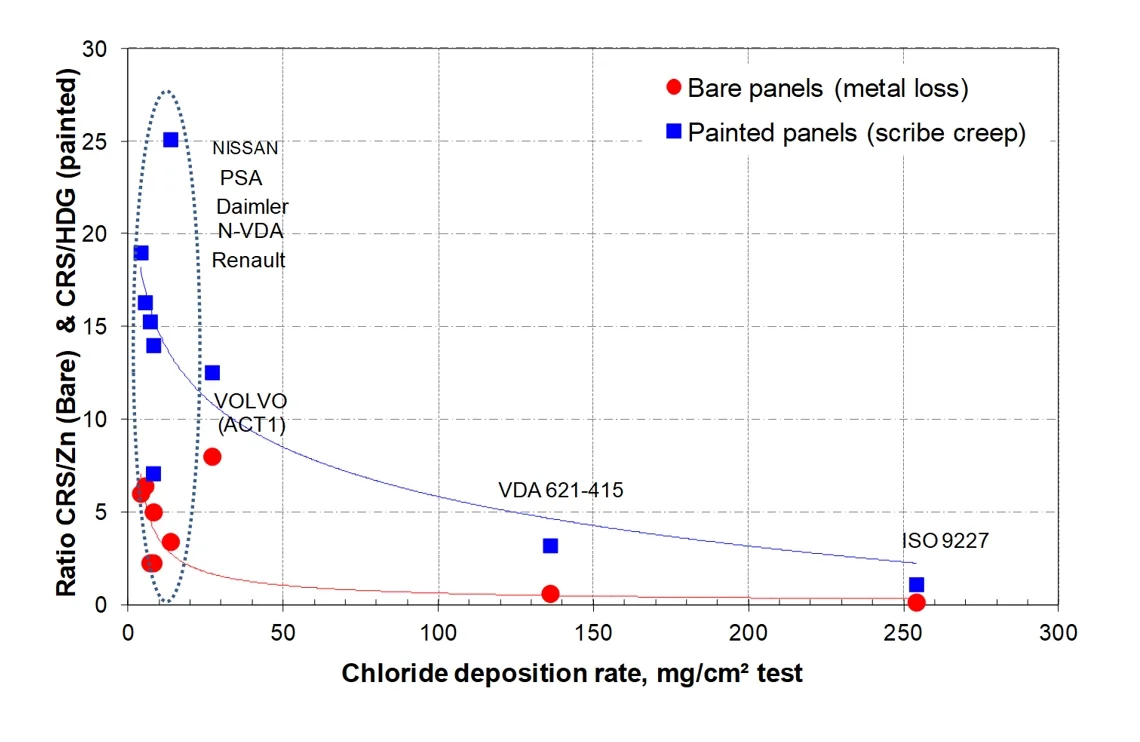
Our expertise covers the qualification of anti-corrosion coatings and paints in accordance with the standards specific to each sector : automotive, construction, marine, oil & gas. We also develop accelerated tests that are increasingly representative of real service conditions. Advanced characterisation tools complete this approach : Raman spectroscopy and Electrochemical Impedance Spectroscopy (EIS). They enable analysis of the stresses experienced by coatings throughout their service life.
Let’s discuss your project
Are you dealing with organic coating degradation, looking to qualify a paint system, or responding to a regulatory requirement ? Our experts will work with you to define the best approach : standardised testing, tailored protocol, natural exposure, or research partnership.
F.A.Q – Anti-corrosion coatings and paints
1. What types of anti-corrosion coatings and paints do you test ?
We test the full range of organic protection systems : epoxy, polyurethane, alkyd, zinc-rich, fluoropolymer, conversion primers, powder coatings, and multi-layer systems. We also evaluate metallic coatings (hot-dip galvanising, thermal spray) and elastomers. Our work covers all sectors, from heavy industry to aerospace.
2. What standard governs the qualification of anti-corrosion coatings and paints ?
The reference standard is ISO 12944. It defines corrosivity categories (C1 to CX, Im1 to Im4) and performance requirements for the corrosion protection of steel structures. ISO 12944-6 covers laboratory testing. ISO 12944-9 applies to offshore environments. Other standards complement this framework depending on the sector : ISO 20340, NORSOK M-501, automotive OEM standards (VDA, Renault, Volvo, Scania…).
3. Do you offer natural exposures for coating qualification ?
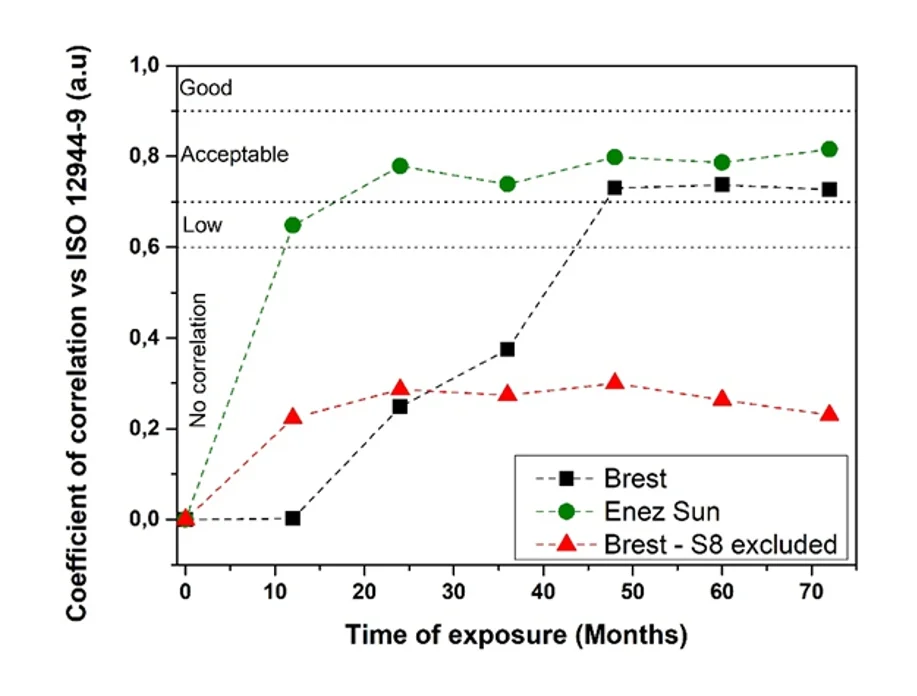
Yes. The French Corrosion Institute operates atmospheric exposure sites covering all corrosivity categories from C2 to CX per ISO 9223. The Brest site, in an Atlantic marine environment (C4–C5), is particularly suited to the qualification of anti-corrosion coatings and paints per ISO 12944-6. These exposures complement accelerated testing and allow validation of correlations with real ageing. → Learn more about our exposure sites
4. Can we entrust you with failure analysis on a coating in service ?
Yes. Our teams carry out failure analyses on degraded in-service coatings : blistering, delamination, filiform corrosion, undercorrosion, UV degradation. The analysis combines several techniques : microscopic examination, Raman spectroscopy, 3D profilometry, and electrochemical measurements. → Learn more about our corrosion expertise