Onshore corrosion : cathodic protection, soil testing and monitoring of buried infrastructure
The French Corrosion Institute supports network operators, gas companies, and industrial stakeholders in managing corrosion in their onshore infrastructure : buried pipelines, gas transmission networks, underground storage facilities, and metal foundations. Thanks to our soil laboratory – unique in Europe – and our expertise in cathodic protection, we assess soil corrosivity and qualify coatings. We also model stray current phenomena and provide real-time monitoring of onshore infrastructure, from initial characterization through to in-service follow-up.
A heterogeneous and evolving environment: understanding corrosion phenomena in soils
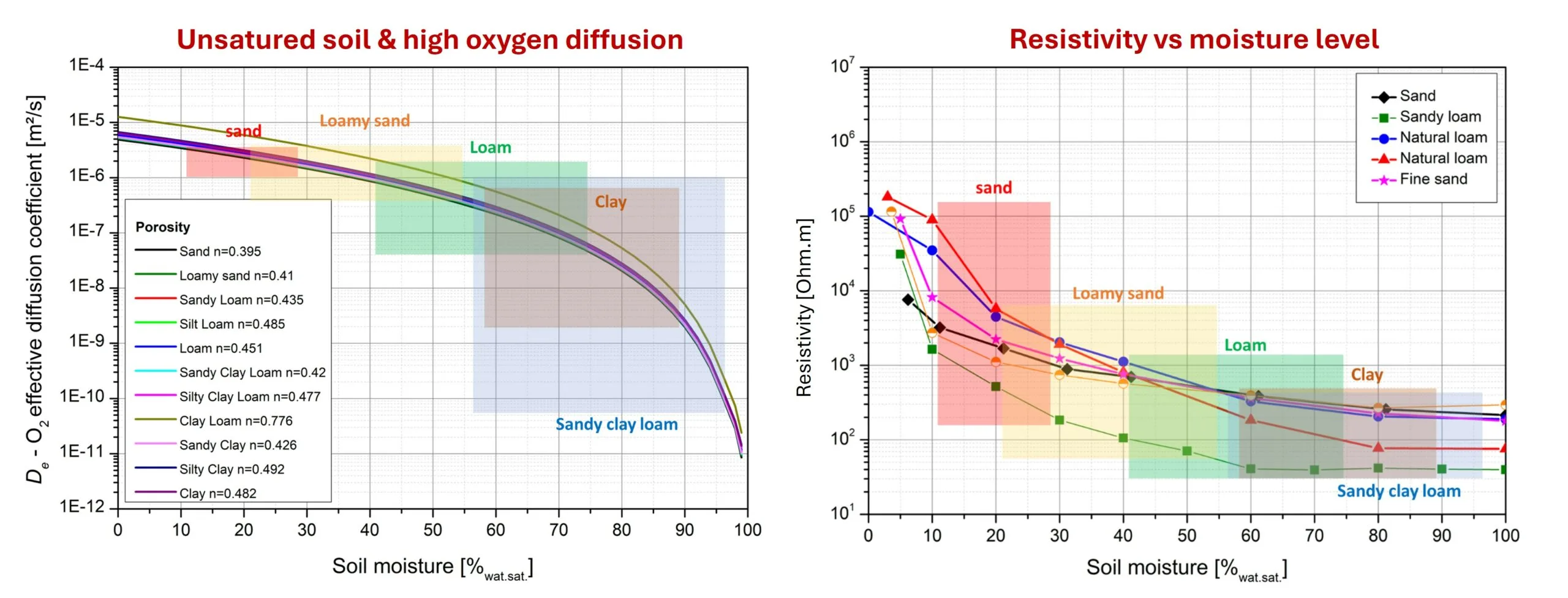
Buried pipelines, gas and fluid transport networks, and metal foundations are exposed to corrosion in soils—an environment that is heterogeneous and often poorly understood. Soil variability—composition, moisture content, microorganisms, and pollution—makes predicting and controlling corrosion particularly complex. The French Corrosion Institute has recognized expertise and a unique soil laboratory to support infrastructure managers in preventing and managing corrosion risks in onshore assets.
Our missions
- Characterize soil corrosivity and assess corrosion risks for buried infrastructure.
- Study the effectiveness of cathodic protection systems and associated coatings.
- Evaluate the impact of soil environments and associated coatings on cathodic protection (current demand, interference phenomena, relaxation currents, risk of hydrogen embrittlement, etc.).
- Analyze complex phenomena: stray currents, differential aeration, microbiologically influenced corrosion.
- Provide real-time monitoring of corrosion and environmental parameters for buried infrastructure, either on site or remotely.
Our services
- Soil characterization: moisture content, resistivity, pH, chlorides, sulfates, texture ; evaluation according to DIN 50929-3 and EN ISO 12501-2
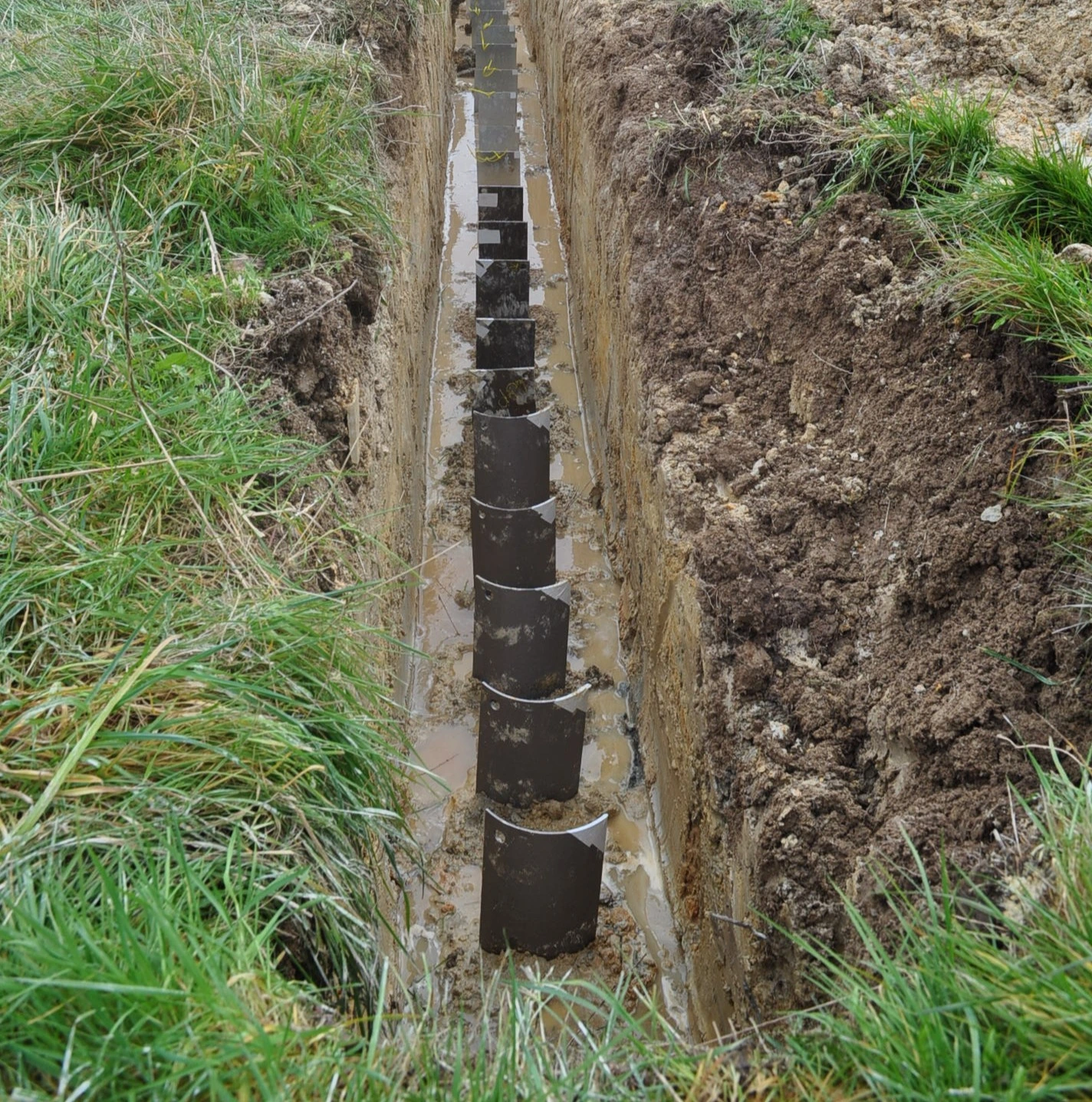
- Corrosion testing in natural or synthetic soils: coupons, mass loss, localized corrosion
- Cathodic disbondment testing of coatings in soil environments with controlled moisture content
- Study and design of cathodic protection systems
- Long-term polarization curve measurements with current interruption
- Assessment of microbiologically influenced corrosion (MIC), in partnership with Corrodys
- Provision of real-time corrosion and environmental monitoring solutions : custom ER probes, corrosion potential, redox potential, temperature, moisture content, galvanic coupling, differential aeration
- On-site exposure testing across France and Europe, with remote data acquisition and monitoring
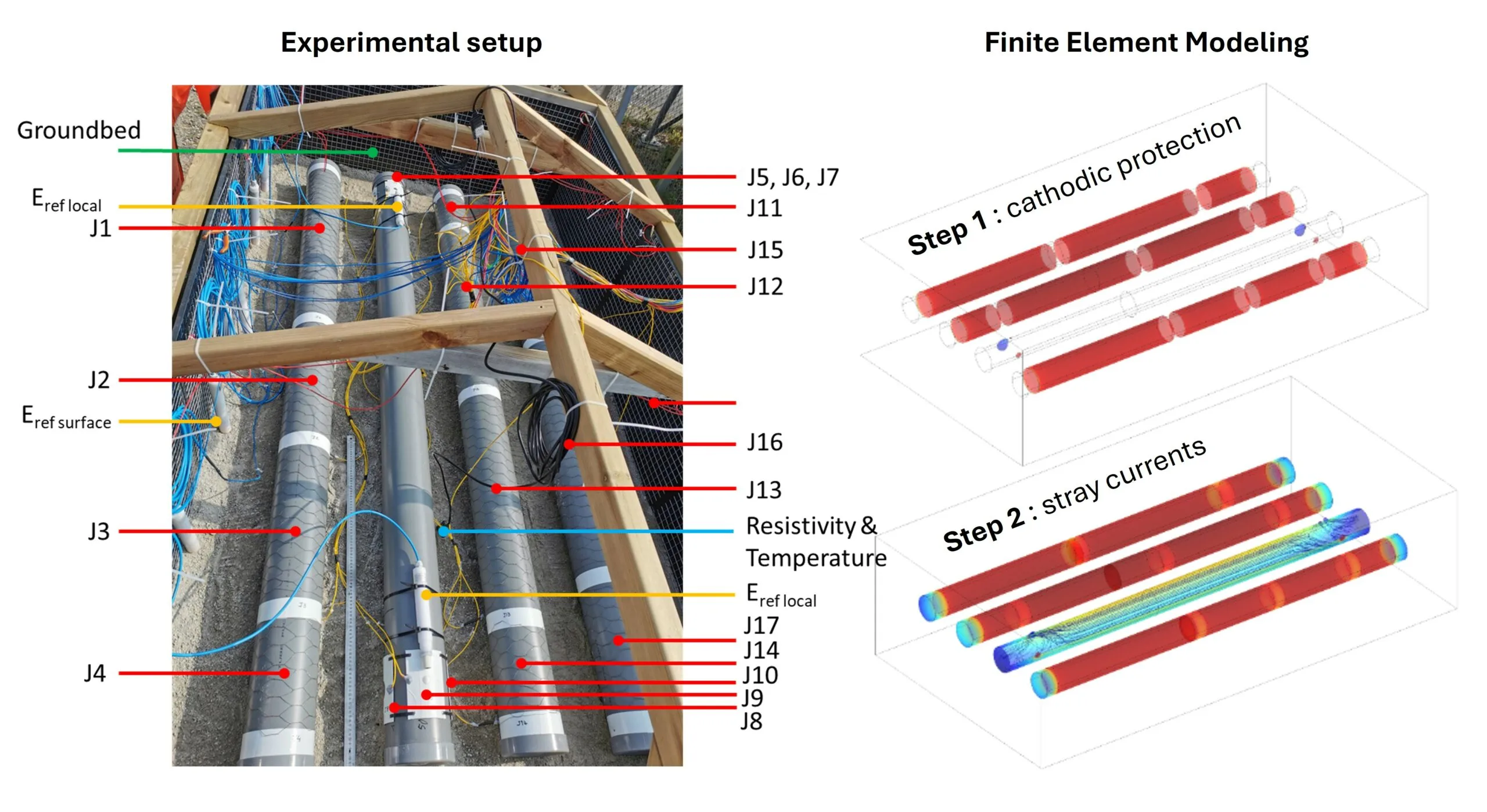
- Finite element modeling (polarization, interference phenomena, and stray currents)
For more information about our testing and exposure capabilities for the onshore sector, please visit our Soil Laboratory page.
Activities of the MRC “Corrosion and cathodic protection in soils”
Within the ARCOR association, the French Corrosion Institute conducts collaborative projects for the onshore sector with key stakeholders: ArcelorMittal R\&D Gent (OCAS), ArcelorMittal R\&D Esch/Alzette, BAC Corrosion Control, BS Coatings, EDF, GRTgaz, JFE Steel Corporation, Nippon Steel, Nordion Energi AB, Storengy, Tata Steel NL, Teréga, and TotalEnergies One Tech.
The MRC on Corrosion and Cathodic Protection in Soils aims to improve the understanding and control of corrosion affecting buried structures by optimizing the interaction between coatings and cathodic protection. It develops testing methods and predictive models to reproduce soil complexity and ensure the long-term durability, safety, and cost-effectiveness of energy infrastructure.
Would you like to learn more about our services?
Contact us : brest@institut-corrosion.fr
F.A.Q
1. Why are onshore infrastructures particularly vulnerable to corrosion ?
Buried pipelines and metal structures are exposed to a complex and evolving environment: variable soil resistivity, moisture content, microorganisms, differential aeration gradients, and stray currents. These factors, often combined, accelerate degradation even in protected steels. → Contact us
2. How do you assess the corrosivity of a soil ?
We carry out a full characterization: resistivity, pH, moisture content, chlorides, sulfates, and texture. The assessment follows EN ISO 12501-2 and DIN 50929-3. Our soil laboratory has dedicated equipment for natural and reconstituted soils to accurately reproduce field conditions. → Our Soil Laboratory
3. Do you carry out cathodic disbondment testing of coatings ?
Yes. We perform cathodic disbondment tests in soil environments with controlled moisture content, as well as long-term polarization curve measurements with current interruption. These tests evaluate the coating–cathodic protection interaction and the risk of hydrogen embrittlement. → Our cathodic protection expertise
4. Can you model stray current phenomena on our pipeline networks ?
Yes. We carry out finite element modeling (polarization, interference phenomena, stray currents) and provide real-time monitoring solutions — custom ER probes, corrosion potential, redox potential, galvanic coupling – with remote data acquisition. → Contact us