
Context
Aluminium alloys, widely used in aerospace and automotive industries, are susceptible to localised corrosion in chloride-rich environments. Current accelerated corrosion tests, whether automotive cyclic tests or the aerospace standard salt spray test, do not fully replicate real service conditions. There is therefore a need for real-time monitoring tools capable of capturing corrosion dynamics on structural aluminium alloys in representative environments.
Methods
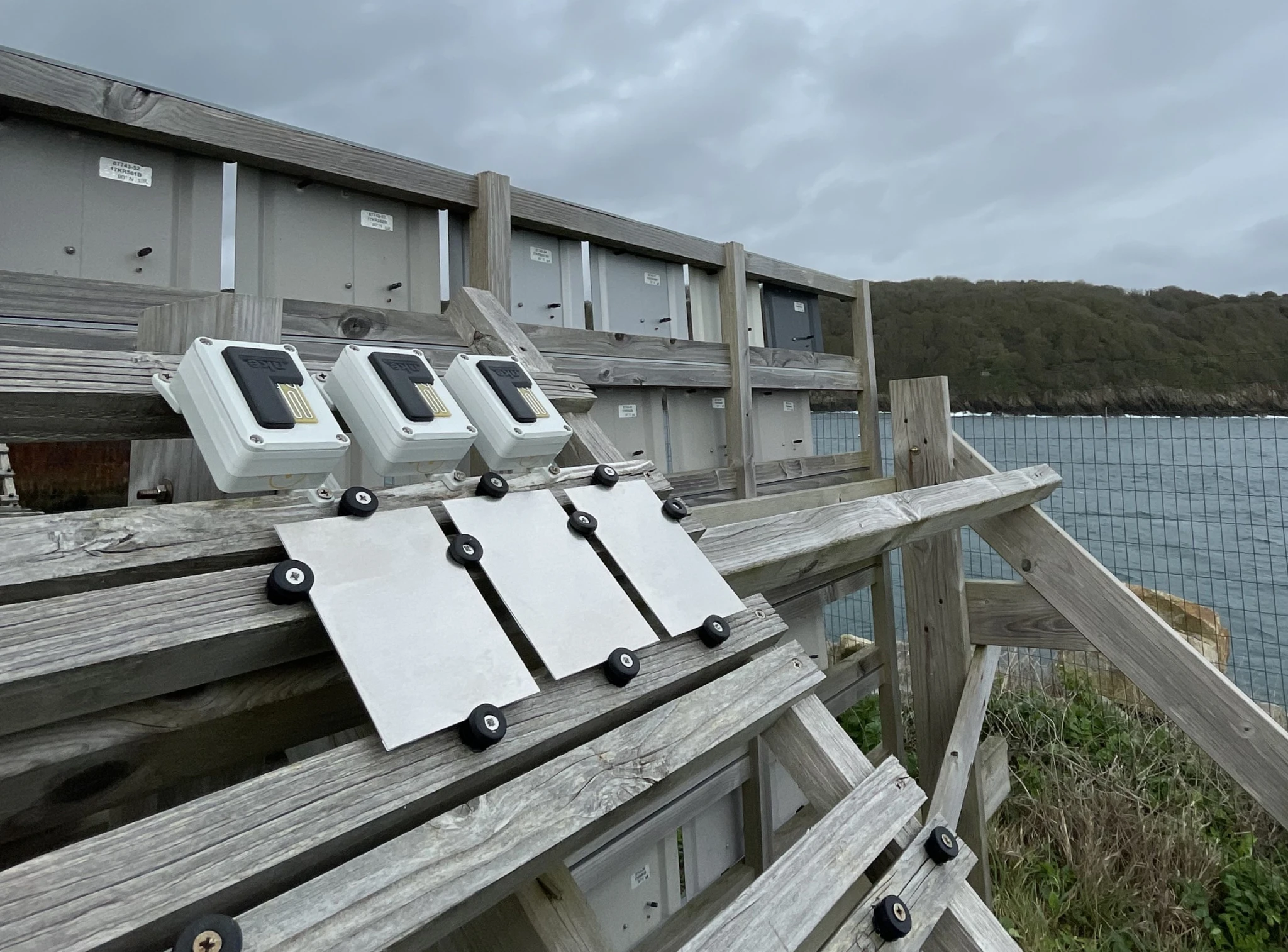
The study used Al₉₄Cu₆ (AA2219) electrical resistance (ER) sensors and AA2024-T3 coupons exposed to three types of chloride-contaminated conditions: pre-contamination with wet/dry cycling, a Volvo cyclic corrosion test, and a neutral salt spray test (NSST). Corrosion depth was assessed by optical microscopy on cross-sections, and a finite element model (FEM) was used to interpret the relationship between ER measurements and localised corrosion geometry.
Main results
ER sensors demonstrated excellent reproducibility across all tested conditions, in contrast to the high variability observed in cross-section measurements. While ER-derived corrosion thickness did not match mean pit depths, due to the localised nature of corrosion, the sensors effectively averaged the corrosion signal over a large surface area. The finite element model helped explain this discrepancy through pit size and density effects. Peak corrosion rates were consistently observed during the wet-to-dry transition, and active corrosion was detected even below the efflorescence threshold of NaCl, a finding that would be undetectable with conventional electrochemical methods. Overall, ER sensors proved to be valuable for real-time mechanistic studies and the development of more representative accelerated tests.