Effect of Oxygen contamination on HIC-SSC qualification results of carbon steels

Domaine

Oil&Gas

Objectif

Evaluate the impact of poor laboratory practices on SSC/HIC qualification test results for the oil and gas industry.

Participants / Sponsors

TechnipFMC, Industeel, GE, Total, Salzgitter, Vallourec

Principaux résultats

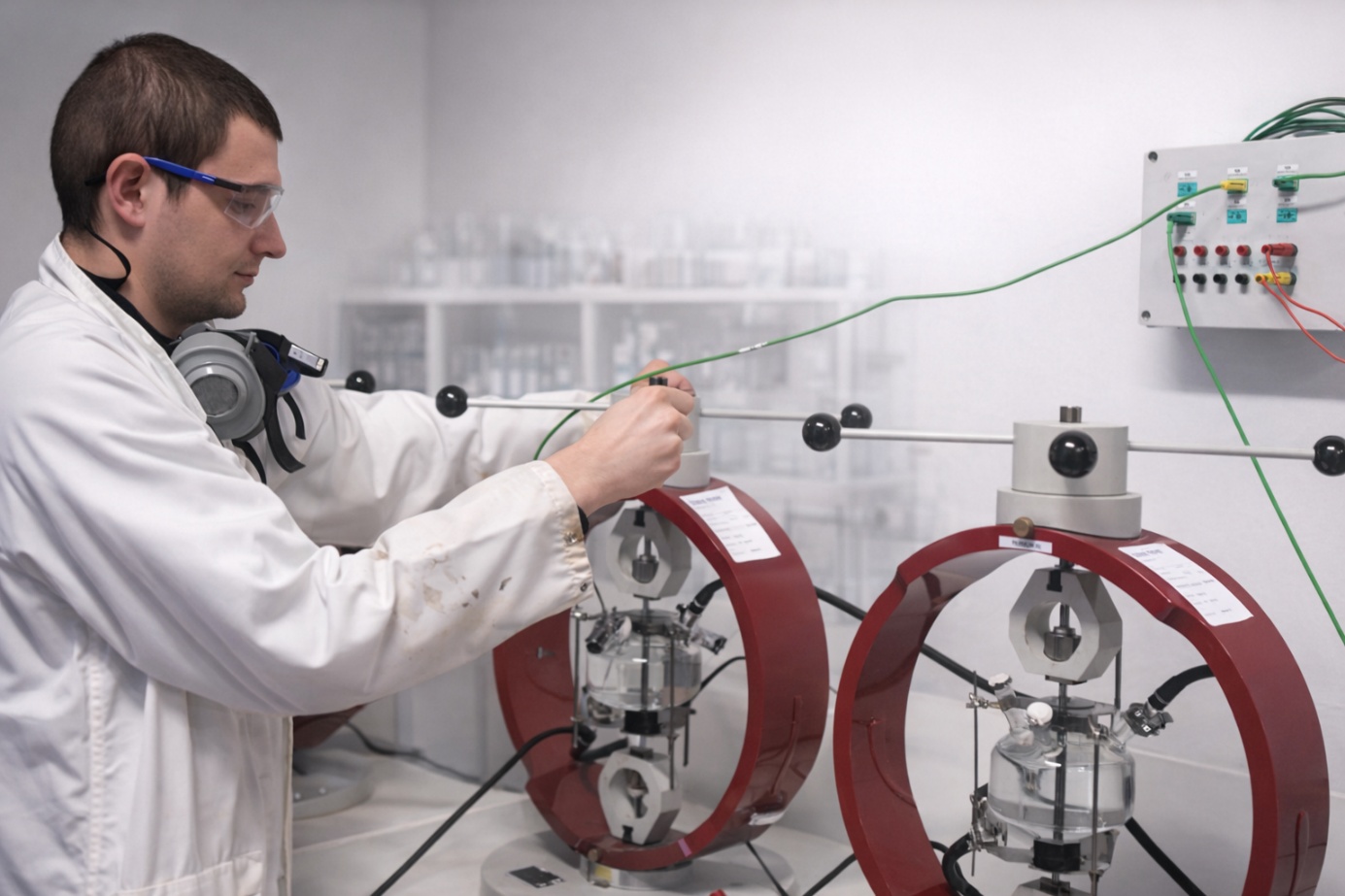
HIC (Hydrogen-Induced Cracking) and SSC (Sulfide Stress Cracking) qualification tests carried out according to NACE TM0177 or NACE TM0284 require thorough deaeration of the solutions prior to saturation with the test gas. Maximum limits of 10 to 50 ppb of dissolved oxygen are specified in the standards, but the origin of this limitation is poorly understood. In particular, to simulate poor laboratory practices, it was necessary to investigate the impact of oxygen contamination beyond this limit on test results. 

To address this question, a Joint Industry Project (JIP) was carried out in collaboration with IFPEN. The results clearly show that oxygen contamination modifies test outcomes, but that the effect differs depending on the test method considered.

Pour en savoir plus

D. Deffo Ayagou et al. – NACE Corrosion conference 2018 – paper 10931 : https://doi.org/10.5006/C2018-10931

Mendibide et al – NACE Corrosion conference 2019 – paper 12894 : https://doi.org/10.5006/C2018-10931

D. Deffo Ayagou et al. –  Corrosion 74 (11) (2018) 1192-1202 : https://doi.org/10.5006/2893

D. Deffo Ayagou et al. –  Corrosion 75 (4) (2018) 389-397 : https://doi.org/10.5006/3092

G. Joshi et al. Corrosion 77 (9) (2021) 961-975 : https://doi.org/10.5006/3805